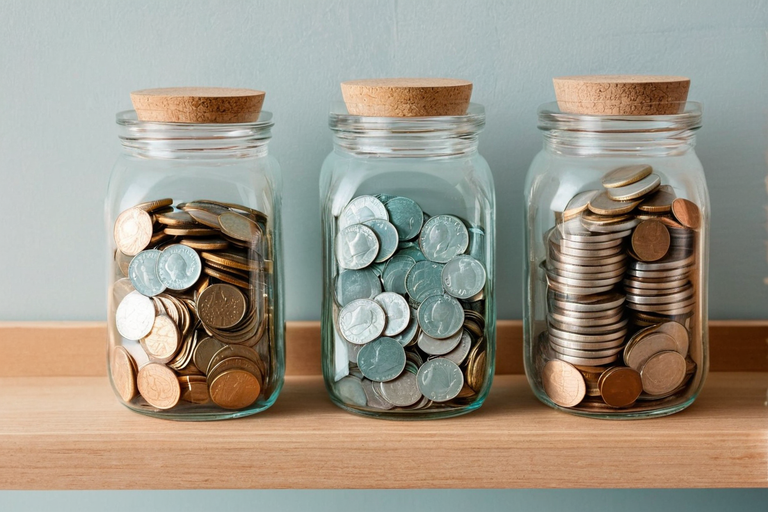
A $1,000 cash cushion doesn't solve every financial problem, but it solves several of the most common ones: a car repair that would otherwise go on a credit card, a utility shutoff notice, an emergency vet visit. For a lot of households, it's the difference between a rough week and a debt spiral.
If you don't have it yet, here's how to build it quickly, even if the budget already feels tight. None of these require a windfall. They require a few deliberate choices over 4–8 weeks.
Start with the fastest wins
Before looking at your regular budget, scan for money that's already available:
Sell things you own
Most households have $200–$500 worth of unused items within reach: electronics in a drawer, clothes not worn in a year, furniture in storage, sports equipment, tools. Facebook Marketplace, Craigslist, and eBay move items quickly. This is the fastest path to a chunk of cash.
Check for unclaimed money
Each state holds unclaimed property (old utility deposits, forgotten bank accounts, uncashed checks) from businesses and financial institutions. The national search tool at missingmoney.com (run by the National Association of Unclaimed Property Administrators) searches most state databases at once. It takes three minutes. Some people find nothing; some find hundreds of dollars.
Look for immediate income
A single extra shift, a weekend of delivery driving, or a few hours on TaskRabbit can move the needle faster than trimming small expenses. If your schedule allows it, a quick burst of extra income (even $150–$300 over a couple of weekends) shortens the timeline significantly.
Trim the budget temporarily
The goal isn't to live on rice and beans forever. It's to redirect a specific amount for a defined period. Eight weeks of tight spending is different from an open-ended restriction with no target in sight.
Pause subscriptions you won't miss this month
Streaming services, gym memberships, and meal kit boxes are all easy to pause without canceling permanently. Pausing two or three subscriptions might free up $50–$80/month. Not huge, but meaningful over a short window.
Cook at home for four weeks
Restaurant and takeout spending is typically one of the highest discretionary categories in a budget. For families, cutting from $400/month to $150 in groceries (doing this by cooking simple meals at home rather than eating out) generates $250 in four weeks. For individuals, the numbers are smaller but the ratio is similar.
Put a freeze on non-essential spending
A temporary "no unnecessary purchases" rule (no clothing, no impulse buys, no non-essential store runs) tends to generate $100–$200/month in savings for most households. It's uncomfortable for about two weeks and then gets easier.
Automate the savings before you spend it
The most reliable way to build savings is to move money to a separate account the day you get paid, before you have a chance to spend it. Even if you're manually transferring $50 or $100 per paycheck, the separation creates a psychological barrier. Mixing savings into your checking account makes it easy to absorb.
A high-yield savings account (HYSA) pays meaningfully more interest than a traditional bank savings account. For a $1,000 balance, the difference is small. But it's a better habit to build. Read more about how HYSAs work in our guide to what a high-yield savings account is.
A sample 8-week plan
Say your goal is $1,000 in 8 weeks. That's $125/week. Here's one way to get there:
- Week 1: Sell items around the house (target $200)
- Weeks 2–4: Cook at home, pause subscriptions, freeze non-essential spending (save $75–$100/week)
- Weeks 5–8: Continue budget freeze, add one or two extra income hours if possible (save $75–$100/week)
That's not a guaranteed result. It's an illustrative example. Your numbers will look different. The point is that $1,000 in 8 weeks is achievable with consistent effort across a few categories, not one dramatic change.
What to do after you hit $1,000
A $1,000 emergency fund is a starting point, not a finish line. The standard guidance from financial professionals is 3–6 months of essential living expenses in liquid savings. For most households, that's $8,000–$20,000, which takes a lot longer to build. Start by protecting the $1,000 (keep it in a separate account you don't touch for non-emergencies), then shift to building it further over time.
If you're also carrying high-interest debt, the question of whether to save first or pay down debt first is worth thinking through. Our guide on building an emergency fund while paying down debt covers how to balance both. And for the bigger picture on what "enough" looks like, see our piece on how much to have in an emergency fund.
Your next step
Pick one action from this list and do it today. Selling one item, pausing one subscription, or checking missingmoney.com takes 20 minutes and can add real money to your account this week. Progress in small steps is still progress.
This article was generated with the assistance of AI and reviewed for accuracy. It is for general educational purposes only and is not financial, tax, or legal advice.